Miles Barden Director, Digital Products
Digital Products / AI / Operations / 0 → 1

I turn ambiguous business problems into systems that work.

I lead products where software, physical operations, customers, and legacy architecture collide.

+10% mobile conversion
From an enterprise AI shopping experience taken from concept to production in a single quarter across a national retail commerce platform.
01 Enterprise Generative AI & Retail Commerce

Can an AI shopping agent actually improve conversion—or does prompt entropy turn it into an expensive liability?

+10% Mobile CVR Lift
~1% Flagged vs. human assistance
<100% Of forecast spend (Under budget)
Phase 1 ➔ Sitewide Multi-phase deployment scale
System Architecture // Agent Core V2 & Capability Routing
Customer on PDP / search results
↓
Combined Chat (AI + live rep in one thread)
↓
Agent Core V2 · capability routing
↙ Product match Catalog & fitment recommendations
↓ Page context PDP content & live specifications
↓ Domain knowledge Lab test data & customer reviews
↘ Human handoff Unified contact center routing
↓
Guardrails in code  ·  automated test suite
↓
┄┄ Order tracking (next, pending Web APIs) ┄┄
The Obvious Approach

Keep growing one agent. Every new capability went into a single core prompt, built up patch by patch until the prompt was hundreds of lines of overlapping instructions.

The Unacceptable Risk

Every release could break something that already worked. Overlapping and duplicate instructions confused the model. Hard rules lived in prompt text where nothing enforced them, so each new capability made production less predictable.

The Critical Decision

Rebuilt the agent core around capabilities. Each capability gets its own spec, its own tool and its own tests. Hard rules moved out of the prompt and into code, where they're enforced instead of hoped for.

What That Bought Us

New capabilities ship without breaking existing ones. The revised agent launched with live-agent handoff built into the same chat. Roughly 1% of messages were flagged as less helpful than a person, monthly spend stayed consistently under forecast, and the architecture scaled smoothly from pilot to sitewide rollout.

02 Systems Modernization & Contact Center Strategy

What if a salesperson knew why you were calling before saying hello?

Today // Every call starts cold Inbound-only · Reactive
Phone rings ↓ Rep answers with no context ↓ Rep looks up history by hand ↓ Customer re-explains their vehicle and last order
The Vision // Rep console Vision. Foundation in progress.
Phone rings ↓ Caller matched to a customer record ↓ Vehicles, last order and open issues visible before pickup ↓ Rep opens with context, and the call logs itself
The Constraint

Sales reps were inbound-only. They waited for the phone, sold to whoever called and moved on. Customers started from scratch on every contact, and chat and messaging ran on separate vendors with no shared record.

The Critical Decision

One platform for every conversation. Secured executive approval to consolidate customer chat onto a single contact-center platform, with the AI agent as the front door. Chat consolidates first and telephony follows, building toward one surface where a rep sees the whole customer.

The Tradeoff Accepted

Prove the habit before building the tool. The first phase is a spreadsheet and a dialer, on purpose. Screen-pop waits until a governed customer record, consent rules and do-not-contact controls exist underneath it, because automating outreach on an ungoverned record is how CRM programs fail.

Where It Stands

Retiring two chat vendors delivers six-figure annual savings. The outbound calling interface is built. A multi-phase roadmap runs from a manual call queue to an unified contact console spanning text, Live chat, phone, and social channels with AI providing assistance to enhance the human connection.

03 The Product Lab // Cross-Industry Translation

Proving that product judgment transfers across industries.

Exceptional product leadership requires staying close to how software meets the physical world. Here is how I reframe constraints in two completely different operating environments.

0-to-1 Operational Architecture

Salon OS: A salon doesn't need scheduling software. It needs an operating system for the 90 minutes a client is in the building.

1 Book
→
2 Arrive ✕ Reception bottleneck
→
3 Chair ✕ Idle waiting time
→
4 Color Prep ✕ Unmetered chemical waste
→
5 Checkout ✕ Front desk card traffic jam
WE BELIEVE

Clients will willingly pre-authorize payment before arrival if it eliminates post-appointment waiting.

THE TEST

SMS hosted pre-authorization links sent with 48-hour appointment reminders across 50 trial bookings.

SUCCESS CRITERIA

≥85% completion rate without receptionist intervention.

THEREFORE

Remove payment hardware from styling chairs entirely, eliminating in-salon PCI footprint and recapturing 8 minutes per appointment.

WE BELIEVE

Stylists will log real-time chemical usage if input friction is reduced to zero-friction tactile chips while wearing gloves.

THE TEST

Glove-friendly single-tap recipe chips (`+1 Extra Bowl`) on locked Android station tablets at the color bar.

SUCCESS CRITERIA

90%+ backbar tracking compliance during pilot week.

THEREFORE

Automate chemical formula costing directly into client tickets, instantly recovering lost backbar product margins.

Estimated Production Model // Bottleneck Engineering

Brew Box: She didn't have a demand problem. She had a throughput bottleneck.

400 cans/wk Physical Production Ceiling
A local specialty cold-brew maker was turning away wholesale accounts and catering contracts because retail store prep dragged down production. The assumption was that she needed more retail hours.
The Real Bottleneck Sequence
Wholesale Demand

Retail cafes, events & subscriptions requesting 1,200+ cans/wk.

→
THE BOTTLENECK

Pulling two espresso shots at a time into 5-gallon buckets during active retail hours.

→
Canning & Nitrogen

Manual counter-pressure seam sealer limited to 20 cans/hour.

→
72-Hr Freshness Window

Short distribution window forcing small batches.

The Bottleneck Insight

The constraint wasn't sales or marketing. It was extraction volume. You cannot scale a canning brand on a commercial double-group espresso portafilter.

The Operational Decision

Designed an 18-row dynamic multi-variable BOM model. Decoupled production from the retail cafe into a commissary kitchen schedule, shifting extraction to bulk cold-steep immersion.

The Estimated Model

An automated seamer investment ($10,200) reclaims 18 hours/week of labor, shifting modeled unit economics from $4.4k as-is to $25k turnkey scaled capacity with an estimated 4.2-month payback.

Projected Capacity

Modeled to quadruple weekly production to 1,600 cans with zero loss in dissolved solids (TDS) consistency, unlocking wholesale hotel and grocery distribution.

What I tend to work on

  • 0 → 1 digital products & platforms
  • AI-enabled commerce & workflow intelligence
  • Complex operational & physical systems
  • Omnichannel customer experience (CX)
  • Legacy modernization without operational downtime
  • Cross-functional product operating models

Comfortable getting technical

  • API design, orchestration & telemetry
  • Data modeling, unit economics & BOM architecture
  • Enterprise telephony (CTI/Websockets) & legacy core (IBMi)
  • Payment gateways & zero-scope PCI architecture
  • Hands-on systems prototyping in code & Figma
  • Mentoring engineering leaders into agile product owners
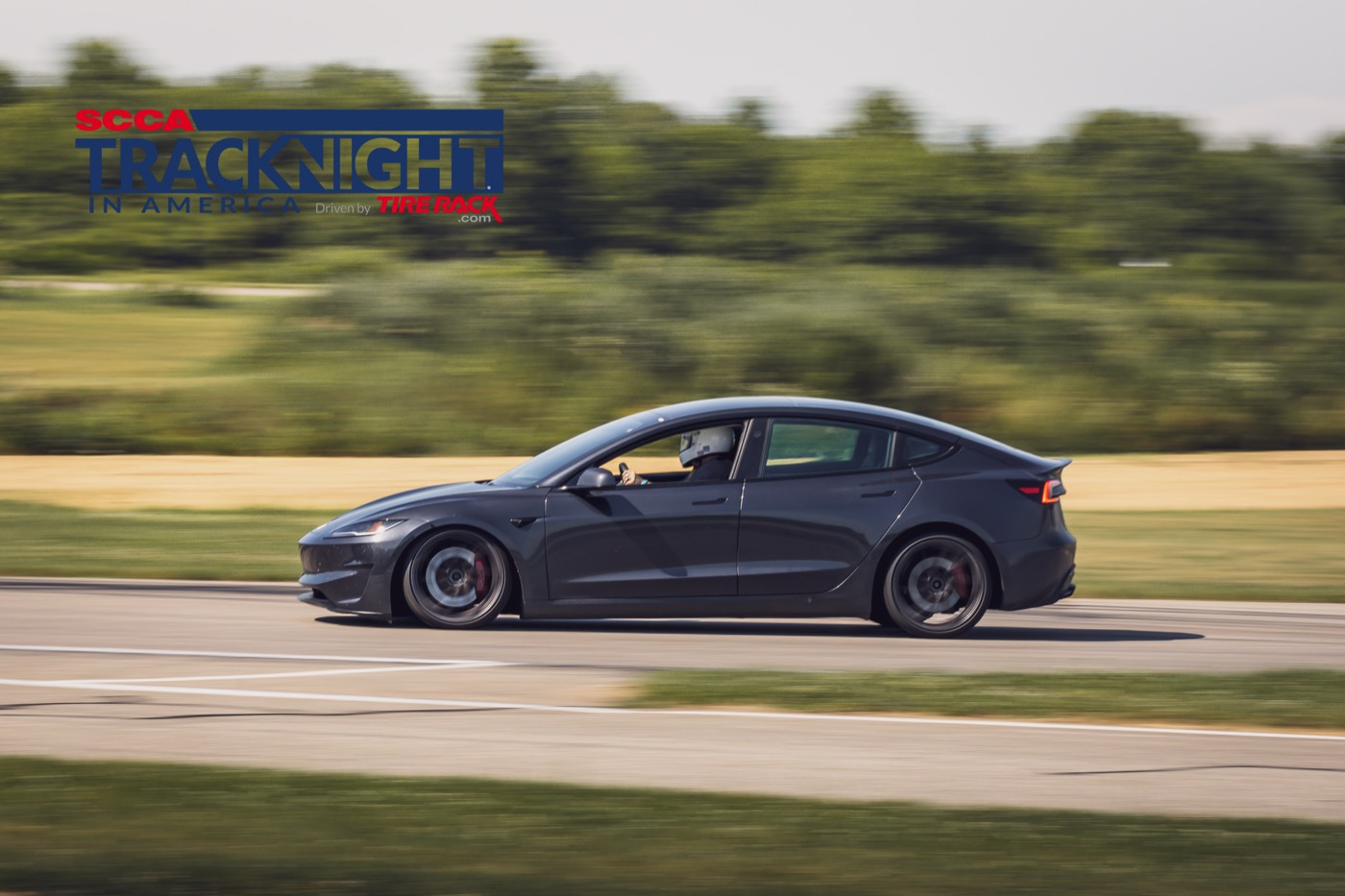
Miles Barden racing autocross
20 years behind the wheel in SCCA autocross and One Lap of America.

Outside the software.

Three shots to lay down a perfect lap. I autocross for the mental game: building the plan before the line, then committing 100% of my attention to translating vehicle dynamics in real time.

I love the bari sax because of it's versatility. Within a single song I can support the rhythm section, blend in the sax section, provide counterpoint to the melody, and lead the whole band.

Woodworking provides an outlet to bring ideas to life. There’s an unmatched satisfaction in shaping raw wood into something practical and timeless.

Wood smoke, sizzling cast iron, and a deep spice cabinet provides room for inifite experimentation. Trying new ingredients and techniques to expand the palettes of people you care about is one of life’s great joys.

“I suppose there’s a pattern: I like understanding how complex things work, getting better through iteration, and making things with other people.”

Amanda’s husband. John, Cole & Sam’s dad. Grounded in South Bend, Indiana.